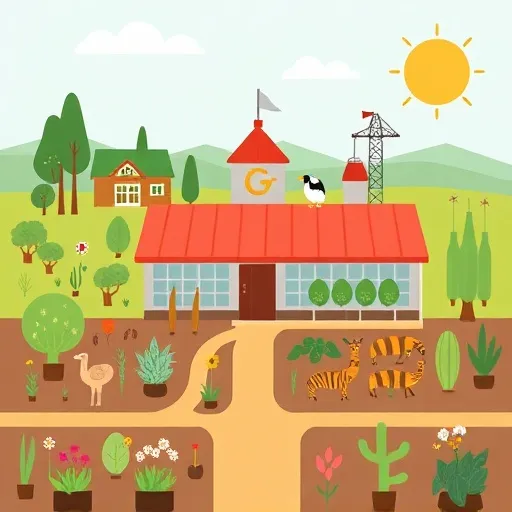
Research facility fo
What Is an Agricultural Experiment Station, Anyway? Understanding How Do Agricultural Experiment Stations Work
So you've heard the term tossed around, but you're still wondering—how do agricultural experiment stations work, exactly? At their core, an agricultural experiment station is a research facility totally dedicated to studying every single aspect of farming and food production. Picture it as a living, breathing laboratory where scientists, agronomists, soil specialists, and entomologists roll up their sleeves and get their hands dirty—literally. These stations sit right at the intersection of applied research and practical farming, testing fresh ideas out in real-world conditions instead of just inside controlled labs. If you really want to grasp how do agricultural experiment stations work, think of them as the bridge between cutting-edge science and the dirt under a farmer's boots.
Most stations are tied to land-grant universities or government agricultural programs, though a few operate independently or through public-private partnerships. Their mission sounds simple on paper but gets complicated fast in practice: figure out what works, what flops, and why—then share those findings with the people who need them most. That feedback loop is the heartbeat of how do agricultural experiment stations work.
A Quick Look at the History and Evolution of Agricultural Research and Farming Science
The whole concept took root back in the late 1800s when governments realized that farming needed science just as much as industry did. The first formal stations popped up across Europe and North America, and the model spread like wildfire. By the mid-20th century, these stations were behind breakthroughs in crop rotation, fertilizer use, pest control, and livestock breeding.
Fast forward to 2026, and the game has changed dramatically. Today's stations are just as likely to be running genomic sequencing on drought-resistant wheat as they are testing traditional irrigation methods. Climate resilience, carbon sequestration, and precision agriculture are now front and center. The tools evolved, but the core purpose stayed the same: solve problems that matter to farmers and consumers alike. That's the timeless answer to how do agricultural experiment stations work.
The Core Functions: What Actually Happens Inside and How Do Agricultural Experiment Stations Work Day to Day
1. Applied Research and Field Trials in Crop Science and Soil Health
This is the bread and butter of any station. Researchers design experiments to test hypotheses about crop yields, soil health, water usage, pest resistance, and way more. A typical field trial might compare ten different varieties of corn under identical conditions to see which performs best. Or it might test how a new cover crop affects soil nitrogen levels over three growing seasons. When people ask how do agricultural experiment stations work, this is the first thing to point to.
The key here is replication and control. Scientists don't just plant a seed and hope for the best—they set up randomized plots, control variables, and collect data meticulously. This rigor is exactly what separates a real experiment station from a hobby farm.
2. Soil Analysis and Plant Tissue Testing Using Remote Sensing and IoT Sensors
Soil is the foundation of everything. Stations maintain sophisticated labs where they analyze soil samples for nutrient content, pH levels, organic matter, and microbial activity. Plant tissue analysis is another big one—researchers can tell a lot about a crop's health by looking at the nutrients in its leaves.
In 2026, many stations now use remote sensing technology and IoT sensors to monitor fields in real time. Instead of waiting for a lab result, a farmer can get alerts about soil moisture or nutrient deficiencies straight to their phone. That instant feedback is a huge part of how do agricultural experiment stations work in the modern era.
3. Pest Management and Disease Control Through Integrated Pest Management and Beneficial Insects
Bugs, fungi, and viruses are a farmer's worst nightmare. Experiment stations study pest lifecycles, test biological control agents, and evaluate integrated pest management (IPM) strategies. The goal isn't just to kill pests—it's to do so in a way that's sustainable, cost-effective, and safe for the environment.
This often involves beneficial insect rearing, where stations breed natural predators like ladybugs or parasitic wasps to combat harmful pests. It's a delicate balance, but when it works, it slashes reliance on chemical pesticides significantly.
4. Variety Development and Plant Breeding With Marker-Assisted Selection and Gene Editing
Ever wonder where that new type of drought-tolerant sorghum came from? Probably an experiment station. Plant breeders at these facilities cross-pollinate, select, and test thousands of plant lines over many years to develop varieties that are higher-yielding, more disease-resistant, or better suited to specific climates.
Modern breeding programs now incorporate marker-assisted selection and gene editing techniques. These tools speed things up dramatically—what used to take a decade can now happen in just a few years. That acceleration is one more reason how do agricultural experiment stations work matters more than ever.
5. Extension Services and Outreach Connecting Farmers, Ranchers, and Growers to Research
Research means nothing if it stays locked in a lab. That's why most stations have an extension component—a direct line to farmers, ranchers, and growers. Extension agents translate complex findings into practical advice, run field days, publish guides, and answer questions from the community.
In recent years, digital outreach exploded. Webinars, podcasts, and online dashboards now bring station findings to a much wider audience. A farmer in a remote area can access the same data as someone living next door to the station.
How Are Experiment Stations Funded and Organized? The Funding, Grants, and University Connection
Funding typically comes from a mix of sources: government grants, university budgets, commodity group contributions, and private partnerships. This diversity is both a strength and a challenge. On one hand, it keeps stations from being overly dependent on any single source. On the other, it means researchers often spend as much time writing grant proposals as they do in the field.
Organizationally, stations vary widely. Some are large, multi-campus operations with dozens of satellite plots. Others are small, focused facilities serving a specific region or crop. Regardless of size, most share a common structure—and understanding this structure helps clarify how do agricultural experiment stations work from the inside:
- Director or superintendent – oversees operations and strategic direction
- Principal investigators – lead specific research projects
- Field technicians – handle day-to-day planting, sampling, and data collection
- Lab staff – run analyses and maintain equipment
- Extension specialists – bridge the gap between research and real-world application
The Role of Technology in 2026: Precision Agriculture, Data Analytics, and Artificial Intelligence
Technology has transformed how experiment stations operate. Here are some of the biggest shifts:
Precision Agriculture Tools Like GPS, Drones, and Variable-Rate Seeders
GPS-guided tractors, variable-rate seeders, and drone-based imaging are now standard equipment at many stations. These tools allow for incredibly precise field trials, where different treatments can be applied to small plots with minimal overlap or error.
Data Analytics and Machine Learning for Crop Prediction and Yield Optimization
Machine learning algorithms crunch massive datasets to identify patterns that humans might miss. For example, an AI model might predict which plant lines are most likely to thrive under drought conditions based on years of historical data. This doesn't replace human expertise—it amplifies it.
Controlled Environment Agriculture Using Greenhouses, Vertical Farms, and Hydroponics
Some stations now operate greenhouses and vertical farms where conditions can be controlled down to the minute. This allows researchers to run experiments year-round and isolate specific variables more effectively. It's especially useful for studying things like light spectrum effects on plant growth or nutrient uptake in hydroponic systems.
Open Data Platforms and Collaborative Research for Global Innovation
Sharing data has become a priority. Many stations now publish their findings on open-access platforms, allowing researchers, farmers, and policymakers worldwide to benefit. This collaborative approach accelerates innovation and reduces duplication of effort.
Real-World Impact: Why Food Security, Sustainability, and Climate Resilience Matter
You might be thinking, "This all sounds interesting, but does it actually affect me?" The answer is a resounding yes. Here's how:
- Food security – Higher-yielding, disease-resistant crops mean more food for a growing global population.
- Environmental sustainability – Better soil management and reduced chemical inputs protect waterways and wildlife.
- Economic viability – Farmers who adopt station-recommended practices often see improved profitability.
- Climate resilience – Drought-tolerant varieties and water-saving techniques help farms survive extreme weather.
- Consumer health – Research on nutrition, food safety, and post-harvest handling directly impacts what ends up on your plate.
In short, agricultural experiment stations are one of the most underappreciated pillars of modern society. They don't make headlines like tech startups or entertainment giants, but their work touches every single meal you eat. Once you understand how do agricultural experiment stations work, you can't unsee their fingerprints on everyday life.
Challenges Facing Experiment Stations Today: Funding, Climate Change, and Talent Pipeline
Despite their importance, these stations face real obstacles. Funding is always a concern—agricultural research doesn't always attract the same level of investment as, say, medical research. There's also a growing disconnect between urban populations and farming, which can make it harder to justify public spending on agricultural programs.
Climate change adds another layer of complexity. Researchers must now design experiments that account for shifting weather patterns, new pest migrations, and unpredictable growing seasons. It's like trying to hit a moving target.
Then there's the talent pipeline. Convincing young scientists to pursue careers in agricultural research isn't always easy, especially when other fields offer higher salaries or more glamorous work. Stations are responding by partnering with universities, offering internships, and highlighting the real-world impact of the work. If you want to see how do agricultural experiment stations work in practice, just watch how they adapt to these pressures.
How to Engage With an Agricultural Experiment Station: Field Days, Soil Testing, and Internships
If you're a farmer, gardener, student, or just someone curious about how food is grown, there are plenty of ways to get involved:
- Attend field days – Many stations host open houses where you can tour facilities and talk to researchers.
- Subscribe to newsletters – Stay updated on the latest findings and recommendations.
- Submit samples – Some stations offer soil testing or plant disease diagnosis services to the public.
- Volunteer or intern – Hands-on experience is invaluable if you're considering a career in agriculture.
- Follow them online – Social media and websites often share practical tips and research highlights.
The Future of Agricultural Experiment Stations: Urban Agriculture, Interdisciplinary Collaboration, and Traditional Ecological Knowledge
Looking ahead, these stations are poised to play an even bigger role in addressing global challenges. Climate adaptation, food security, and sustainable intensification are all on the agenda. Expect to see more interdisciplinary collaboration, with biologists working alongside engineers, data scientists, and economists. That cross-pollination of ideas is already reshaping how do agricultural experiment stations work.
There's also a push toward greater inclusivity. Stations are increasingly recognizing the value of traditional ecological knowledge, partnering with indigenous communities, and ensuring that research benefits diverse populations. It's a recognition that good science isn't just about data—it's about people.
Another trend to watch: urban agriculture. As cities grow, there's mounting interest in rooftop farms, community gardens, and indoor growing systems. Experiment stations are starting to devote resources to these areas, recognizing that food production isn't just a rural issue anymore. And as consumers get more curious about where their food comes from, the question of how do agricultural experiment stations work will keep moving from the countryside into the mainstream conversation.